
Key Takeaways: Everything You Need to Know About Sleep Audio in 2026
- Sleep audio works by occupying your mind with low-stimulation content, interrupting the thought loops that keep you awake at night.
- The main categories include sleep stories, soundscapes, guided meditation, and boring spoken-word audio designed specifically for cognitive shuffling.
- Deeply Unimportant offers ad free, uninterrupted, loopable audio editions specifically designed to help your brain settle into deep, restorative sleep.
- Ad free audio matters more than most people realize because mid-roll interruptions can jolt you awake just as you drift off.
- Matching your audio type to your sleep obstacle (racing thoughts, noise sensitivity, physical tension) determines whether the content will actually work for you.
What Is Sleep Audio and Why Does It Help You Fall Asleep?
Sleep audio refers to any audio content specifically designed to help you transition from wakefulness into sleep. This includes sleep stories, white noise, nature sounds, guided meditation, and newer formats like intentionally boring spoken-word content.
The reason audio helps you sleep comes down to how your brain works at bedtime. When you lie in the dark with nothing to focus on, your mind often fills the silence with its own content: tomorrow’s worries, that awkward conversation from three years ago, or your mental to-do list.
Sleep audio gives your brain something else to process. By occupying your attention with neutral, low-stakes content, it interrupts the self-generated thought loops that characterize presleep rumination. Your mind cannot simultaneously replay stressful scenarios and follow a narrator describing a quiet train journey through the countryside.
How Does Sleep Audio Work on Your Brain?
Sleep audio works through a psychological process called cognitive displacement. When you give your brain a specific, low-stimulation focus, it cannot simultaneously run its anxiety playlist. The rumination isn’t suppressed. It’s displaced, crowded out by content that occupies the same neural real estate without generating arousal.
Your brain waves operate at different speeds throughout the day. Conscious thought happens on faster wavelengths (beta), while sleep is associated with slower wavelengths (theta and delta). The challenge for many people is that they get stuck in conscious beta-mode when they try to fall asleep.
Audio sleep aids help slow down brain activity by giving predictable, steady input. This signals to your nervous system that it’s safe to downshift from alert problem-solving mode into rest.
Types of Sleep Audio: Finding What Works for Your Brain
Not all sleep audio works the same way. Different formats address different sleep obstacles, and choosing the wrong type is a common reason people conclude that audio sleep aids don’t work for them.
Sleep Stories and Bedtime Stories for Adults
Sleep stories are narrated tales specifically crafted to be engaging enough to hold your attention but not engaging enough to keep you awake. They typically run 30 to 60 minutes and feature calm settings where nothing dramatic happens.
These work by engaging your brain’s narrative processing capacity. When you listen to a story, your language centers activate to follow the plot, your imagination constructs the scene, and your predictive systems generate mild expectations about what happens next. This is precisely the cognitive machinery that, left unoccupied at bedtime, generates worry narratives.
Sleep stories essentially redirect your internal storytelling system from “what if the project fails” to “the train rounded a bend and the valley opened before it.”
White Noise, Pink Noise, and Soundscapes
Soundscapes work through an entirely different mechanism than stories. They don’t engage narrative processing at all. Instead, they create a consistent auditory baseline that serves two functions: masking environmental noise that might trigger alertness, and creating monotonous sensory input that the brain can safely ignore.
White noise contains equal intensity across all frequencies, creating a soft hiss similar to a radio tuned to static. Pink noise is softer, with a deeper, more mellow sound like steady rain on a rooftop. Brown noise turns down the intensity even faster as frequencies climb, resulting in a deep, low roar like a distant waterfall.
If your sleep problems stem primarily from environmental noise rather than racing thoughts, soundscapes may be your better option.
Guided Sleep Meditation
Guided meditation targets the physiological dimension of sleeplessness. If your insomnia manifests physically with jaw clenching, shoulder tension, shallow breathing, or restless legs, you need an intervention that addresses the body, not just the mind.
Body scans move attention slowly through the body, bringing awareness to tension you may not have consciously noticed. Progressive muscle relaxation systematically tenses and releases each muscle group, teaching your nervous system what “relaxed” actually feels like.
These techniques are the most clinically studied of the audio sleep aid formats, with strong evidence for reducing both sleep-onset latency and nighttime waking.
Boring Spoken-Word Audio for Cognitive Shuffling
Cognitive shuffling is a technique developed to interrupt the brain’s analytical problem-solving mode at night. By presenting a stream of non-threatening, unrelated data points, this type of audio signals to the nervous system that it’s safe to transition from alertness to a sleep state.
Unlike sleep stories with characters and plot arcs, boring spoken-word audio presents highly structured content read in a deliberate, precise way. This format works particularly well for people whose brains need something to hold onto but who find traditional stories too engaging.
Deeply Unimportant uses this approach, reading manuals, codes, and international standards in a flat newscaster voice designed to serve as a “cognitive shunt.” The technical narration gives enough structure to occupy your attention without stimulating your alertness centers.
Why Ad Free Audio Matters for Sleep
One of the most overlooked factors in sleep audio effectiveness is whether the content runs continuously without interruption. Ad supported content can seriously undermine your ability to fall asleep and stay asleep.
The Problem with Mid-Roll Interruptions
Picture this: you’ve been listening for twenty minutes, your breathing has slowed, your muscles have relaxed, and you’re finally drifting off. Then a loud voice announces that this episode is brought to you by a mattress company, and suddenly you’re fully awake again.
Your brain is designed to notice sudden changes in audio. This alertness response served our ancestors well when a snapping twig might indicate danger. It’s less helpful when the “danger” is a podcast sponsor.
Mid-roll advertisements reset your progress toward sleep. You have to start the relaxation process over again, which can feel increasingly frustrating and counterproductive.
The Case for Uninterrupted, Loopable Audio
Effective sleep audio should run continuously for as long as you need it to. For some people, that’s 20 minutes. For others, especially those who wake during the night, having audio available all night long makes a significant difference.
Loopable audio that can run for 8 hours without going silent prevents the jarring transition from sound to silence that can trigger awakening. Deeply Unimportant’s 8-hour editions are specifically designed for all-night listening, continuing until morning without interruption.
Ad free audio editions remove the most common source of sleep disruption: unexpected commercial breaks. When your brain knows the audio will remain consistent and predictable, it can more easily relax into the listening experience.
How to Match Sleep Audio to Your Specific Sleep Problem
The secret to effective sleep audio is matching the content type to your specific obstacle. Using the wrong format for your particular sleep challenge explains why many people try audio sleep aids and conclude they don’t work.
For Racing Thoughts and Anxiety
If your mind runs through mental to-do lists, replays conversations, or generates “what if” scenarios when you try to sleep, you need audio that occupies your verbal and narrative processing systems.
Sleep stories work well for many people in this category. For those whose thoughts are more persistent or who find stories too engaging, boring spoken-word content offers a more structured alternative. The key is giving your brain something to track without something to respond to emotionally.
For Environmental Noise Sensitivity
If external sounds like traffic, neighbors, or household noise keep you awake, you need audio that masks those disruptions. Consistent soundscapes like white noise, pink noise, or rain sounds create a blanket of predictable audio that covers sudden jarring noises.
For noise masking, the audio should run continuously all night, not shut off after 30 minutes. Silence in the middle of the night makes you newly vulnerable to disturbances.
For Physical Tension and Restlessness
If you lie in bed with clenched muscles, shallow breathing, or an inability to get comfortable, guided meditation or progressive muscle relaxation addresses the physiological component of your sleeplessness.
These techniques work when practiced consistently over time, not just on nights when you’re already desperate for sleep.
For Waking in the Middle of the Night
Many people fall asleep fine but wake at 3 a.m. and can’t return to sleep. For this pattern, having gentle audio available to re-engage with can help prevent the spiral of frustration and clock-watching that makes returning to sleep even harder.
Audio that continues playing all night or that you can easily restart offers a consistent return point. The familiar content signals to your brain that nothing has changed, making the transition back to sleep smoother.
Common Sleep Audio Mistakes (And How to Avoid Them)
Understanding what doesn’t work is just as important as understanding what does. Here are the most common errors people make with sleep audio.
Trying to Follow the Content Too Closely
If you’re actively trying to follow a sleep story’s plot or concentrate on meditation instructions, you’re engaging too much cognitive effort. Sleep audio should wash over you. Losing track of where the narrator is means it’s working, not failing.
Switching Content Too Frequently
Boredom with your sleep audio is actually a sign that it’s working correctly. Familiar, repeated content (the same audio every night for a week) is more effective than novelty. Your brain learns to associate that specific audio with sleep.
Using Screens While Listening
Sleep audio should be the last thing before lights-out, not something to listen to while scrolling your phone. The narration needs darkness and stillness to do its job. The screen’s blue light and stimulating content work against the calming effect of the audio.
Expecting Immediate Results
Conditioning your nervous system to associate a specific audio cue with sleep onset takes one to two weeks of consistent use. The first few nights may feel like nothing is happening. Persistence is essential.
Keeping the Volume Too High
Sleep audio should be quiet enough that it doesn’t demand your attention. The goal is a gentle background presence, not something you have to actively listen to.
The Science Behind Sleep Audio: What Research Shows
Research on audio sleep aids continues to grow, particularly around specific techniques and formats. Here’s what the evidence supports.
Cognitive Distraction and Sleep Onset
Studies on cognitive distraction techniques for insomnia show that giving the mind a structured task significantly reduces sleep-onset latency compared to lying in silence. Trying not to think is, of course, a form of thinking. The brain needs somewhere to go, not an instruction to stay still.
Research from Simon Fraser University’s Faculty of Education has explored how cognitive shuffling, the technique behind boring audio sleep aids, helps interrupt the brain’s analytical mode and facilitate the transition to sleep.
Sound and Sleep Quality
Research shows that consistent, soothing sounds can help people fall asleep quicker and improve overall sleep quality. The masking effect of steady audio prevents the sleep disruptions caused by sudden environmental noises.
A 2024 meta-analysis in Sleep Medicine found that smartphone app-based sleep interventions showed significant effect sizes for self-reported insomnia and sleep disturbances.
The Human Voice Advantage
Recent research from Edison and Sounds Profitable confirms what many sleep audio listeners intuitively sense: AI-generated voices undermine the trust and intimacy that sleep programming requires. There’s something about a real human voice that creates a sense of safety and connection that synthetic voices can’t replicate.
Building a Sleep Audio Routine That Works
The most effective use of sleep audio involves creating consistent rituals and conditions. Here’s how to set yourself up for success.
Create a Consistent Bedtime Signal
Just like your body has learned that darkness means it’s time to sleep, introducing a specific sleep audio can help signal to your body that it’s time to wind down. Over time, your nervous system recognizes and responds to these auditory cues.
Use the same audio at the same time each night for at least two weeks before evaluating whether it’s working. Conditioning takes consistency.
Optimize Your Listening Setup
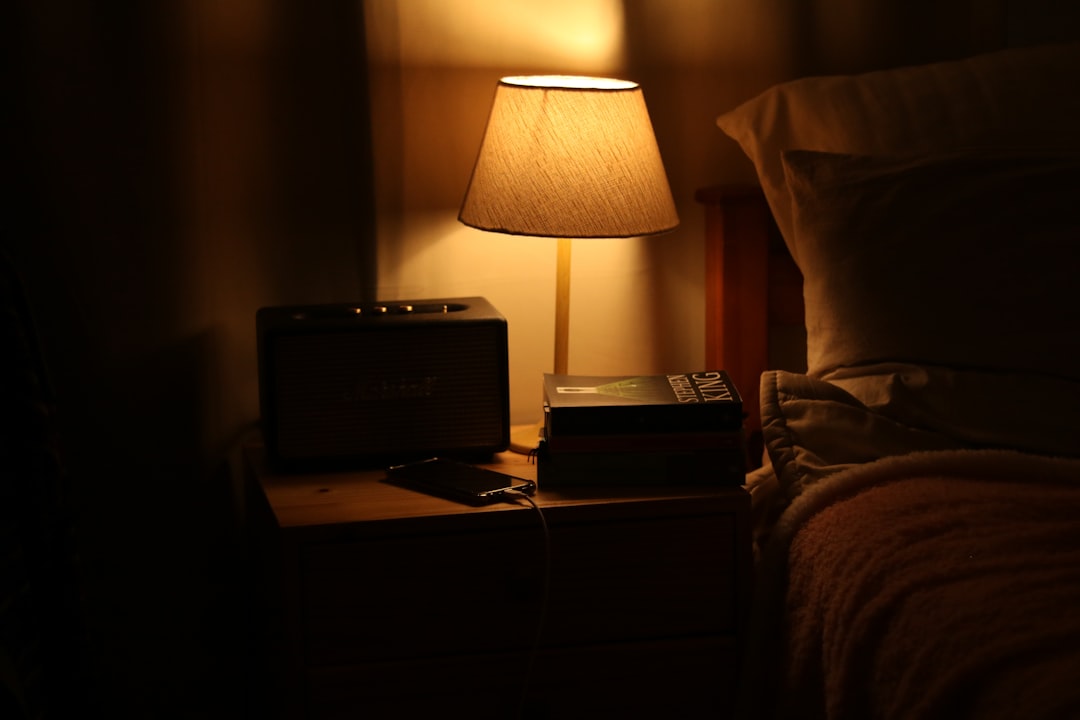
Phone speakers at low volume or a small Bluetooth speaker on the nightstand work better than earbuds for extended listening. Earbuds apply pressure and can cause discomfort after 20 minutes of lying still.
Keep your screen face-down or in the dimmest possible mode. Use a sleep timer so the audio fades naturally after 30 to 45 minutes, unless you’re using content specifically designed for all-night playback.
Start Before You’re Desperate
Don’t wait until you’ve been lying awake for an hour to start your sleep audio. Begin as part of your bedtime routine, before frustration sets in. Prevention is easier than intervention.
Special Considerations for Different Audiences
Different people have different sleep needs and preferences. Here’s how to adapt your approach.
For People with ADHD
People with ADHD often experience executive dysfunction at bedtime, where the brain’s usual task-switching and prioritization systems don’t function as expected. Structured audio content can help by giving external organization that the brain can follow.
Boring spoken-word content like Deeply Unimportant’s cognitive shuffling approach may be particularly effective for ADHD minds that find meditation too unstructured and stories too engaging.
For Anxiety-Related Insomnia
For people with anxiety, the internal “worry track” at bedtime can feel relentless. Audio that gives cognitive displacement, occupying the mental space that anxiety would otherwise fill, can be especially helpful.
The key is finding content that’s engaging enough to crowd out anxious thoughts but not engaging enough to stimulate new alertness. This is why sleep stories are designed to be “interesting and dull at the same time.”
For Shift Workers
Shift workers face unique challenges with sleep audio. The transition from sensory noise at work to domestic quiet can feel disorienting. Sleep audio fills that silence with something neutral and human, giving a more natural wind-down than silence alone.
Choosing Between Sleep Audio Options
With so many sleep audio options available, choosing the right one can feel overwhelming. Here’s a framework for narrowing your choices.
Start with Your Primary Sleep Obstacle
Identify what specifically keeps you awake. Racing thoughts? Environmental noise? Physical tension? Difficulty returning to sleep after waking? Your answer points toward the most appropriate content type.
Consider Your Tolerance for Engagement
Some people find sleep stories perfectly pitched. Others find any narrative too engaging. If traditional sleep stories keep you awake wanting to know what happens next, try ambient soundscapes or intentionally boring spoken-word content instead.
Prioritize Ad Free and Uninterrupted Content
Whatever format you choose, look for options that won’t interrupt your progress toward sleep. Ad free versions are worth the investment if they mean you actually fall asleep instead of being jolted awake by sponsorship messages.
Try Before You Commit
Most sleep audio services offer free trials or free content tiers. Deeply Unimportant offers free episodes so you can test whether the format works for your brain before subscribing for the full ad free experience.
Experiment with different types over a week to find what your system responds to. One format will click. When it does, commit to consistent use for at least two weeks.
In Conclusion: Finding Your Path to Better Sleep with Audio
Sleep audio isn’t a one-size-fits-all solution, but it’s a remarkably effective tool for the right application. By understanding how different formats work on your brain, matching content to your specific sleep obstacles, and committing to consistent use, you can shift bedtime from a source of frustration into a reliable transition to rest.
The key insights to remember: your brain needs somewhere to go at bedtime, not an instruction to be still. Ad free, uninterrupted audio prevents the disruptions that reset your progress. And the “boring” factor isn’t a bug. It’s the entire point.
Whether you choose sleep stories, soundscapes, guided meditation, or deliberately boring spoken-word content like Deeply Unimportant’s loopable audio editions, the goal remains the same: giving your brain something predictable, calming, and entirely unimportant to hold onto while your nervous system does what it’s designed to do. Sleep.
FAQs about Sleep Audio in 2026
What type of sleep audio is most effective for falling asleep?
The most effective type depends on your specific sleep obstacle. For racing thoughts, sleep stories or boring spoken-word content work well. For noise sensitivity, soundscapes like white or pink noise are more appropriate. Deeply Unimportant’s cognitive shuffling approach helps adults whose minds won’t settle by occupying attention with deliberately unstimulating content.
How long should I listen to sleep audio before falling asleep?
Most people fall asleep within 20 to 45 minutes when using appropriate sleep audio. Set a sleep timer for 30 to 45 minutes unless you’re using content designed for all-night playback. If you regularly fall asleep to sleep audio, hearing only the beginning is normal and indicates the audio is working.
Can sleep audio help with insomnia?
Sleep audio can help with sleep-onset insomnia by giving cognitive displacement that interrupts rumination and worry loops. However, for chronic insomnia with significant daytime impairment, audio sleep aids should supplement, not replace, clinical treatment approaches. Deeply Unimportant helps with insomnia by offering ad free, loopable audio that runs all night without interruption.
Why does boring audio work better than interesting podcasts for sleep?
Interesting content activates your brain’s engagement and curiosity systems, which are arousal states incompatible with sleep. Boring audio occupies just enough of your brain to stop it from generating anxious thoughts without being engaging enough to sustain wakefulness. This is why services like Deeply Unimportant deliberately use flat, monotone delivery and administrative content.
Should I use earbuds or speakers for sleep audio?
Speakers work better for most people. A phone speaker at low volume or a small Bluetooth speaker on the nightstand avoids the pressure and discomfort that earbuds cause during extended side-lying. The audio should be quiet enough that it doesn’t demand attention but present enough to occupy background processing.
How important is ad free audio for sleep?
Ad free audio matters significantly because mid-roll advertisements can jolt you awake just as you’re drifting off. Your brain is wired to notice sudden changes in audio, and unexpected sponsor messages reset your progress toward sleep. Deeply Unimportant’s ad free editions ensure continuous, uninterrupted listening throughout the night.
